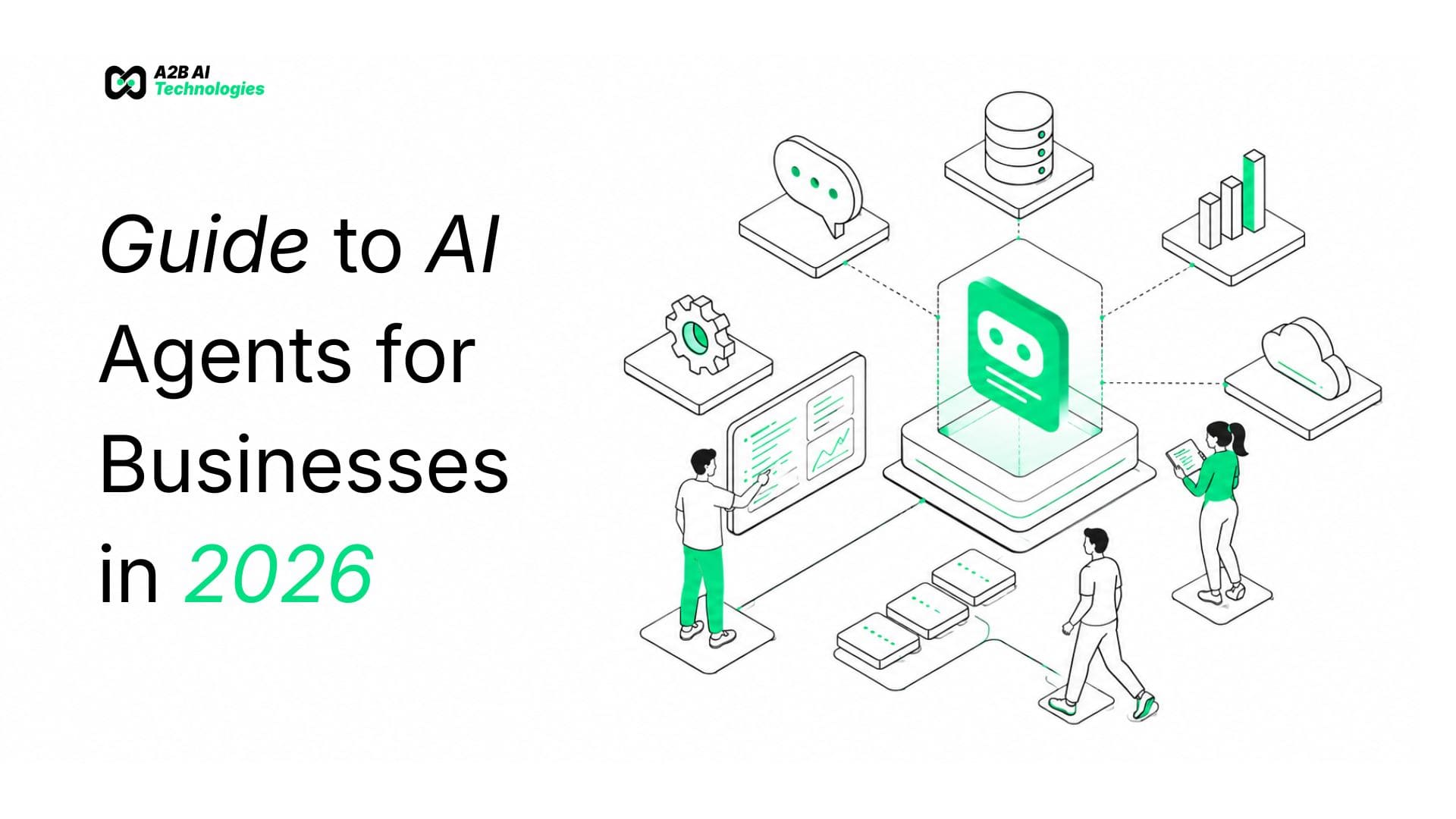
If you’ve heard “AI agent” thrown around a dozen times this year and still aren’t sure how it’s different from the chatbot you already tried, you’re not alone. Most business owners picture a fancier version of the same thing. It isn’t. Here’s what’s actually changed, and what it means for a business your size.
What an AI agent actually is
A chatbot waits for you to ask something, answers, and stops. An AI agent works differently: you give it a goal, and it plans the steps, takes actions, checks the results, and adjusts, without you approving each move along the way. The simplest way to tell the difference: if it waits for the next prompt, it’s a tool. If it decides its own next step, it’s an agent.
In practice, that means an agent doesn’t just answer “what are your hours?” It can qualify a lead, check availability, book the appointment, and follow up if the person goes quiet, all in one continuous sequence.
Why this matters right now
Adoption is moving fast, but there’s a real gap between businesses experimenting with agents and businesses actually running them day to day. Most companies exploring AI agents are still in the trial phase, with only a small fraction having moved a fully working agent into daily use. The businesses closing that gap aren’t the ones with the biggest budgets. They’re the ones who picked one specific, measurable problem, like a slow reply time, a list of no-shows, or a pile of unanswered reviews, and built one agent to solve it, instead of trying to “add AI” everywhere at once.
The main types of AI agents (in plain terms)
- Reactive agents: respond to a specific trigger (a form fill, a missed call, a tag added to a contact) and run a fixed set of steps.
- Goal-based agents: given an outcome to hit (get this lead booked, get this review request answered), they’ll try different paths to get there.
- Learning agents: improve their responses over time based on what’s worked before.
Most small businesses don’t need the most advanced version. A reactive or goal-based agent, built around one workflow, is usually where the real ROI is.
What this looks like for a small or mid-sized business
Here’s where the theory becomes concrete. Three places an agent earns its keep almost immediately:
- Reviving old contacts. Instead of a static “we miss you” text, an agent can tag contacts by how long they’ve been dormant, run a sequenced outreach campaign, and hand off to a human only when someone actually replies.
- Answering inbound messages instantly. Whoever replies first usually wins the booking. An agent trained on your services, pricing, and FAQs can pick up a conversation the moment it comes in at 11pm on a Sunday, not just during business hours.
- Managing reviews without babysitting them. An agent can ask for feedback after a visit, route the happy responses to your public Google listing, and quietly send anything under four stars straight to you instead of the internet.
What it doesn’t do
An agent isn’t magic and isn’t a replacement for judgment. It’s excellent at high-volume, repeatable situations with clear rules, not one-off decisions or anything genuinely new. The goal isn’t “hand everything to AI.” It’s: automate the predictable, keep a human on the exceptions.
How to actually start
Don’t start by asking “what can AI do for my business?” That question is too big and leads to nothing shipping. Start by asking “where do we lose time or money to something repeatable?” Missed follow-ups, slow replies, and unanswered reviews are usually the easiest places to find the answer, because the cost of not fixing them is already visible in your day-to-day.
This is exactly the approach behind Database Reactivation and our AI conversation bots at A2B (A2B AI Technologies): one focused agent, wired into a workflow that already exists, solving one measurable problem before it’s asked to solve ten.
If you’re not sure where your business would get the fastest return from an agent, that’s usually the actual starting question: not “should we use AI,” but “which slow, repeatable thing should we hand off first.”
A2B AI Technologies builds and manages focused AI agents end-to-end, from mapping the workflow to training the AI that handles the conversations. Get in touch and we’ll help you find where your business gets the fastest return.
This article was also published on Medium.